

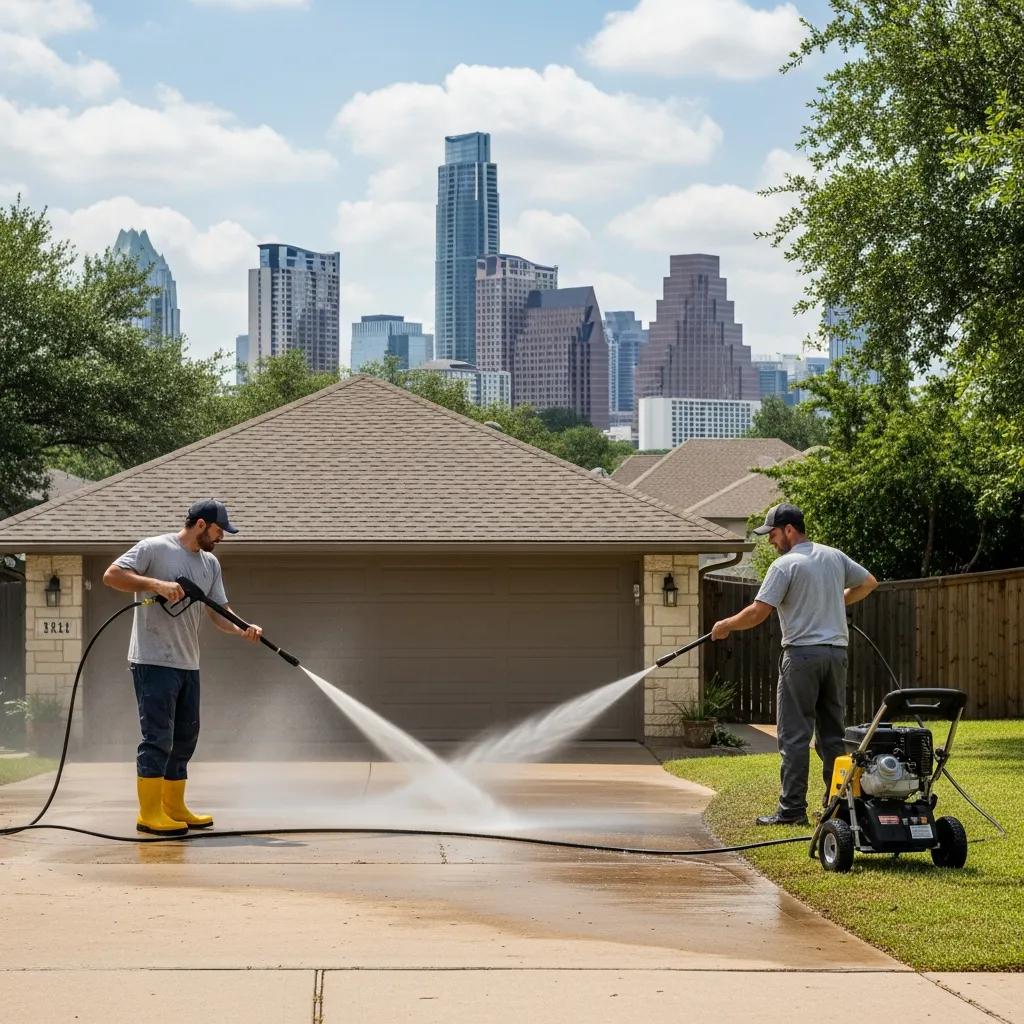
Why Pressure Washing Is Essential for Austin Homes and Businesses: Benefits and Importance of Power Washing
Pressure washing, also called power washing, is the mechanical removal of dirt, biological growth, and pollutants from exterior surfaces using pressurized water and targeted cleaning solutions; in Austin, this maintenance step directly counters climate-driven buildup and preserves material integrity.
This article explains what makes pressure washing essential in Austin by linking local climate patterns — heat cycles, humidity, pollen, and storm runoff — to the specific risks they create for siding, concrete, wood, and limestone. Readers will learn which contaminants pose the biggest threats, the measurable benefits of professional cleaning, recommended service categories for homes and businesses, and realistic schedules for upkeep. The goal is to provide actionable guidance that helps property owners prioritize interventions, understand trade-offs between pressure and soft washing, and decide when to call a skilled provider. Along the way, we use practical examples, comparative tables, and clear lists so you can assess curb appeal, safety, and long-term costs with confidence. After outlining topic-first guidance, the article introduces how a local provider with Austin knowledge can help translate these recommendations into an on-site plan.
What Unique Challenges Does Austin’s Climate Pose to Exterior Surfaces?
Austin’s climate combines hot summers, humid spells, seasonal pollen loads, and intense thunderstorms, and these factors accelerate exterior soiling and material stress through repeated wet-dry cycles and particle deposition. Moisture from humidity and storms feeds biological growth on shaded surfaces, while heat cycles expand and contract materials, increasing microcracks that trap dirt and pollutants. Pollen and dust deposit a fine film that holds moisture and stains porous surfaces like limestone and unsealed concrete, and storm runoff concentrates organic material that encourages algae and mildew. Understanding these climate mechanisms helps property owners target prevention and cleaning strategies that address both appearance and structural risk. The next section drills into how mold, mildew, and algae behave in Central Texas and what that means for maintenance and health.
The long-term effects of such environmental stressors on building materials are a significant concern for property owners, as highlighted by research on climate change and structural integrity.
Climate Change Impact on Building Durability
of significant climatic performance problems for buildings that impact on the service life of structures. The risk for existing internal environment regardless of the external climate.
The durability of building materials under a changing climate, R Emmanuel, 2016
Austin’s climate produces several characteristic pressure-washing triggers:
- High humidity and shaded areas promote persistent biological growth on exterior surfaces.
- Frequent pollen seasons coat horizontal surfaces and create staining when combined with rain.
- Heat-driven thermal cycling causes microdamage that makes surfaces more absorbent.
- Storm runoff and urban dust introduce grit and organic pollutants that accelerate wear.
These climate factors combine to increase the frequency and severity of cleaning needs across many material types, which leads directly into the specific impacts of mold, mildew, and algae.
How Do Mold, Mildew, and Algae Affect Austin Properties?

Mold, mildew, and algae are biological colonizers that thrive where moisture, organic debris, and shade meet; they discolor surfaces, create slippery conditions, and, over time, degrade building materials. In Austin, shaded north-facing siding, decks under trees, and limestone features commonly develop green or black staining because these organisms produce pigments and acids that etch porous materials. Beyond aesthetics, mold and mildew can accelerate rot in wood, break down sealants, and produce allergenic spores that affect indoor air quality when they migrate through gaps.
Cleaning approaches vary by substrate: soft washing with low-pressure detergent is preferred for shingles and siding to avoid damage, while concrete and driveways tolerate higher-pressure washing for stain lift. Recognizing early visual signs and choosing the correct cleaning mechanism reduces material loss and potential health impacts.
Why Is Pollen Accumulation a Seasonal Concern for Exterior Cleaning in Austin?
Pollen in Austin peaks in late winter through spring and again in fall for certain species, producing visible yellow or brown films on light-colored surfaces that attract moisture and trap dust. When pollen accumulates, it can obscure finishes, clog gutters, and combine with rainwater to form stubborn stains that bond to porous stone and unsealed wood. For allergy sufferers, heavy pollen layers on outdoor furniture and entry areas increase exposure when people move between indoors and out, so exterior cleaning influences both perception and health. Scheduling pressure or soft washing before peak pollen months and after heavy pollen events is an effective preventive rhythm for maintaining curb appeal and reducing allergen loads. The next section explains the measurable benefits of professional pressure washing in Austin and how those benefits map to maintenance priorities.
What Are the Key Benefits of Professional Pressure Washing in Austin?

Professional pressure washing offers measurable returns by restoring visual appeal, reducing safety hazards, and protecting materials from progressive environmental damage through targeted cleaning mechanisms and surface-appropriate methods. Technicians use a combination of pressure levels, detergents, and soft-wash chemistries to remove biological growth, pollen, oil stains, and mineral deposits while minimizing risk to sensitive materials. The result is improved curb appeal that supports property marketability, fewer slip-and-fall hazards in commercial areas, and deferred repair costs because contaminants that accelerate decay are removed on schedule. Properly executed cleaning also prepares surfaces for sealing, painting, or renovation, increasing the lifespan of coatings and reducing life-cycle costs.
Below is a concise comparison of key benefits with how they are achieved and what owners can expect as outcomes.
| Benefit | Mechanism | Expected Outcome |
|---|---|---|
| Curb appeal | Remove grime, stains, and biological growth | Surfaces look renewed and attract buyers or customers |
| Safety | Eliminate slippery algae and oil residues | Reduced slip-and-fall incidents and liability exposure |
| Material protection | Clean before sealing or painting | Slower degradation and longer warrantyable life for finishes |
| Healthier environment | Reduce allergens and mold spores on exteriors | Lower allergen transfer into indoor spaces |
This comparison shows that professional cleaning combines visual, safety, and preventative mechanisms to deliver both immediate and long-term value. The next paragraphs explain curb appeal and long-term protection in more detail and offer an example of how local expertise translates these benefits into work priorities.
For property owners evaluating providers, local knowledge matters: Georgetown Power Wash operates as a professional pressure and power washing service provider serving the Austin area and focuses on comprehensive exterior cleaning that enhances curb appeal, protects properties from mold, mildew, and algae, and promotes healthier living environments. Their local focus means recommendations typically prioritize surfaces and schedules that match Austin’s climate patterns; see the dedicated section below for how that local expertise is applied in practice.
How Does Pressure Washing Enhance Curb Appeal and Increase Property Value?
Pressure washing enhances curb appeal by removing visible stains and biological films that make surfaces look aged or neglected, and refreshed exteriors influence buyer and customer impressions in measurable ways. Clean driveways, sidewalks, siding, and entryways present a well-maintained property, and real-estate professionals often note that exterior cleanliness affects perceived value because buyers infer overall care from outward appearance. Driveways and siding deliver some of the highest visual ROI because they are focal points; properly cleaned and sealed surfaces also photograph better for listings. For businesses, storefront cleanliness signals brand reliability and can increase foot traffic; for homeowners, regular exterior cleaning is a cost-effective step when preparing a property for sale or improving neighborhood standing.
In What Ways Does Pressure Washing Protect Your Property from Environmental Damage?
Regular cleaning interrupts damage pathways by removing organisms and deposits that chemically or physically degrade materials over time, which translates into fewer repairs and extended service life for exterior components. Algae and mold secrete acids that stain and break down sealants, wood rot accelerates when moisture is trapped in shaded timber, and particulate buildup abrades finishes during thermal cycling. By cleaning surfaces before damage progresses, pressure washing reduces the incidence of costly interventions like siding replacement or concrete resurfacing. Establishing routine cleaning tied to material vulnerability—such as annual concrete washing and targeted soft washing for roofs—converts maintenance into a predictable expense rather than an unpredictable repair.
Which Pressure Washing Services Are Essential for Austin Residential and Commercial Properties?
Essential pressure washing services align with surface type and exposure: driveways and sidewalks need high-pressure cleaning and degreasing, roofs and siding benefit from low-pressure soft washing and biocide application, and commercial assets like parking lots and storefronts require stain removal and scheduled maintenance to uphold safety and branding. Service selection depends on substrate porosity, biological growth levels, and whether limestone or sensitive finishes are present; inappropriate pressure or chemicals can cause more harm than good. Owners should prioritize services that address the most vulnerable components first—entryways, shaded decks, and areas under tree canopies—and then schedule broader maintenance.
The table below maps common service categories to target surfaces, contaminants, and recommended frequency to help plan a site-specific maintenance rhythm.
| Service | Target Surfaces | Common Contaminants | Recommended Frequency |
|---|---|---|---|
| Driveway & Concrete Cleaning | Driveways, sidewalks, patios | Oil, tire marks, algae | Annually or biannually |
| Roof & Siding Soft Washing | Shingles, vinyl, wood siding | Algae, mold, pollen | Every 1–3 years (roof more frequent if shaded) |
| Deck & Patio Care | Wood, composite decking | Mold, mildew, pollen | Annually, with inspection for sealants |
| Commercial Surface Maintenance | Storefronts, parking lots | Grease, gum, staining | Quarterly to annually based on use |
This EAV-style mapping clarifies which services target which problems and when proactive cleaning is typically most effective. Georgetown Power Wash provides service categories that correspond to these essential needs and can help prioritize interventions based on local exposure and material type.
What Residential Pressure Washing Services Are Available for Austin Homes?
Residential options emphasize material-sensitive approaches: soft washing for roofs and siding to protect shingles and paint films, moderate-pressure cleaning for decks with follow-up sealing recommendations, and higher-pressure cleaning for concrete and masonry where surface integrity allows. Homeowners should request assessments that identify vulnerable areas—such as shaded decks or limestone features—and receive recommendations tailored to preserve finishes.
When dealing with historic stone like Austin-area limestone, professionals typically use gentle detergents and rinsing strategies to avoid etching, and for wood decks, timed cleaning followed by drying and sealing extends life. Preparing surfaces properly before repainting or sealing maximizes the value of those investments and prevents recurring staining.
How Do Commercial Pressure Washing Services Benefit Austin Businesses?
Commercial services focus on appearance, safety, and operational continuity by scheduling work to minimize disruption while removing stains, gum, and biofilms that deter customers or create hazards.
For storefronts, regular cleaning keeps brand presentation consistent and reduces the visual signs of wear that can turn customers away; for parking areas and loading zones, oil and grease removal reduces slip risks and preserves paving.
Commercial contracts often include periodic maintenance plans that align with business cycles and local climate events—such as post-storm cleanups after heavy rains that deposit sediment. Well-planned commercial cleaning balances cleanliness with minimal downtime, helping businesses maintain a professional exterior without interrupting daily operations.
How Does Georgetown Power Wash Provide Expert Pressure Washing Solutions in Austin?
Georgetown Power Wash positions itself as a local expert delivering comprehensive pressure and power washing services tailored to Austin’s climate-driven cleaning needs, focusing on curb appeal, property protection, and healthier exterior environments. As a locally oriented provider, the company’s expertise centers on recognizing which surfaces are most susceptible to Austin-specific contaminants and matching cleaning methods—soft wash versus pressure wash—to substrate sensitivity. Service categories offered align with industry-standard needs: concrete and driveway cleaning, deck and patio care, roof and siding soft washing, and commercial surface maintenance for storefronts and parking areas. Customers looking for an on-site assessment can expect a procedural process that begins with a needs review, followed by a recommended cleaning plan and scheduling; this ensures work targets the highest-impact areas first and preserves material life.
What Unique Value Does Georgetown Power Wash Offer to Austin Customers?
Georgetown Power Wash brings local knowledge of Austin climate and materials to bear on cleaning plans, applying approaches that specifically address mold, mildew, algae, and pollen accumulation common to the region. The company’s emphasis is described in SERP insights as improving curb appeal, preventing environmental damage, and promoting healthier living environments—objectives that map directly to the risks and benefits discussed earlier.
Because Austin properties often include limestone, shaded wood decks, and high-traffic commercial pavements, a provider familiar with these materials can choose treatments that lift stains without causing etching or finish loss. For readers deciding between DIY and pro work, local expertise reduces the risk of inappropriate pressure or chemicals and focuses resources where they deliver the most value.
How Can Customers Request Professional Pressure Washing Services in Austin?
Requesting professional service typically follows a straightforward process: assess the property to list problem areas, request an on-site or virtual estimate, and schedule the recommended service while confirming surface-specific methods and safety measures.
Before contacting a provider, compile photos or notes about stains, shaded areas, and material types so the assessment is focused and efficient.
During the estimate phase, ask about the cleaning approach for sensitive materials and whether soft washing or low-pressure biocide application will be used for roofs and siding.
Finally, coordinate timing to avoid peak pollen season or to follow storm events that produce runoff; a local provider can sequence work to match Austin’s seasonal patterns and minimize repeat cleanings.
What Are Common Questions About Pressure Washing in Austin?
Property owners frequently ask whether pressure washing is necessary given time and cost, how often it should be scheduled for different surfaces, and when a professional is warranted instead of DIY. The answers depend on substrate sensitivity, exposure to shade and trees, and local biological pressure—surfaces exposed to constant moisture or heavy pollen typically need more frequent attention.
Below is a concise FAQ-style table with actionable next-step guidance to help owners decide when to call a professional.
| Question | Short Answer | When to Contact a Pro |
|---|---|---|
| Why is pressure washing important for Austin properties? | It removes climate-driven contaminants that stain and degrade surfaces, preserving appearance and structural integrity. | If staining is widespread, recurring, or affecting safety (slips) |
| How often should you schedule pressure washing? | Frequency varies by surface: annual to biannual for driveways, 1–3 years for roofs/siding, more often for high-traffic commercial areas. | When shading, trees, or humidity cause recurring growth or rapid re-soiling |
| Is professional soft washing better for roofs and siding? | Yes—soft washing uses low pressure and detergents to remove biological growth without damaging materials. | When shingles are fragile, siding is aged, or algae stains persist despite DIY attempts |
This table provides quick, actionable guidance; when in doubt about roof materials or historic stone, consult a professional to avoid inadvertent damage. The final section of each FAQ answer points readers toward professional assessment for sensitive materials and recurring issues.
Why Is Pressure Washing Important for Austin Properties?
Pressure washing addresses the specific interplay of Austin’s humidity, pollen, and seasonal storms by removing materials that cause staining, slippage, and progressive degradation; this intervention protects both appearance and structural elements. Routine cleaning reduces the accumulation of biological agents that trap moisture and penetrate pores, slowing decay and reducing the frequency of major repairs. Beyond material protection, exterior cleaning lowers allergen transfer into living spaces and enhances safety around entrances and walkways. For these reasons, pressure washing is more than cosmetic maintenance in Austin—it is a preventative strategy that keeps properties serviceable and marketable.
How Often Should You Schedule Pressure Washing for Your Austin Home or Business?
Scheduling depends on surface type and exposure: establish a baseline routine and then adjust for local conditions such as shade, trees, and nearby construction that raises dust levels. Typical recommendations are:
- Driveways and concrete: Annual to biannual cleaning, more if oil or heavy staining occurs.
- Roofs and siding: Every 1–3 years using soft washing, with more frequent attention if algae or moss reappears quickly.
- Decks and patios: Annual cleaning combined with seasonal inspections of sealants.
- Commercial exteriors: Quarterly to annual maintenance depending on foot traffic and staining.
These guidelines form a starting schedule; higher frequency is warranted in shaded, humid areas or where pollen loads are heavy. If uncertainty remains—especially for roofs, limestone, or historic finishes—seek a professional assessment to tailor a plan that balances cleaning effectiveness and material preservation.