
Pressure Washing vs Traditional Cleaning: Which Method Offers the Best Exterior Cleaning Benefits?
Pressure washing and traditional cleaning are two distinct approaches to exterior surface maintenance, and this article compares them so you can choose the best method for your property. Pressure washing uses pressurized water flow — often combined with detergents or a soft-wash technique — to remove dirt, biological growth, and stains quickly, while traditional cleaning relies on manual scrubbing, brushes, and lower-pressure rinsing to achieve gentler results. Readers will learn how each method works, the surfaces each suits best, environmental and safety tradeoffs, and decision checklists that match cleaning needs to methods. The guide maps practical factors such as effectiveness, time, cost, and runoff mitigation across six focused sections, and it includes EAV comparison tables and actionable lists to help homeowners assess options. Throughout, target keywords like pressure washing vs cleaning, soft washing benefits, driveway cleaning options, and eco-friendly cleaners are integrated to support discoverability and practical guidance.
What Is Pressure Washing and How Does It Work?
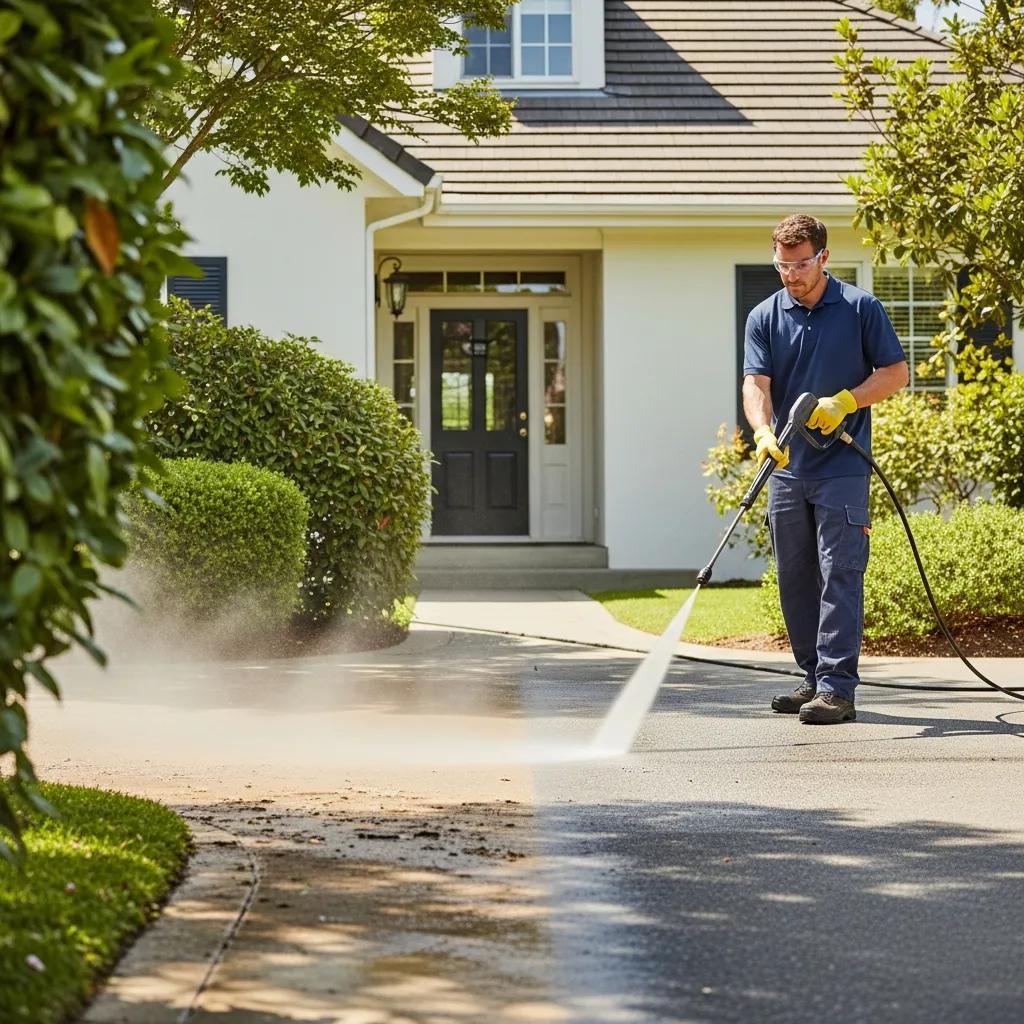
Pressure washing is a high-velocity water cleaning process that removes contaminants by combining mechanical force, nozzle design, and optional cleaning chemistry to dissolve and lift soil from exterior surfaces. The mechanism depends on PSI (pounds per square inch) to deliver impact and GPM (gallons per minute) to determine coverage, with nozzle angle and detergent selection shaping cleaning outcomes. This method produces rapid surface restoration for masonry and concrete when applied correctly, and the same equipment can be adjusted for soft-wash house washing to protect more fragile materials. Understanding these components helps homeowners choose correct settings and recognize when professional calibration is warranted to avoid damage.
How Does Pressure Washing Effectively Remove Dirt and Grime?
Pressure washing removes dirt through mechanical shear from high-pressure water and chemical action when detergents or surfactants are used to break bonds between contaminants and substrate. Mechanical force dislodges crusted debris and biofilms like mold and mildew, while cleaning agents emulsify oils and lift hydrophobic stains for easier rinsing. Heat (from hot-water units) can assist in dissolving grease, though most residential jobs rely on cold-water equipment with appropriate detergents for safety and plant-friendly runoff. These combined actions make pressure washing particularly effective on concrete, masonry, and metal surfaces where deep-set grime or oil stains resist manual scrubbing.
Which Surfaces Are Best Suited for Pressure Washing?

Pressure washing is best suited for durable surfaces such as concrete driveways, brick patios, stone steps, and metal siding where high-impact water and detergents restore appearance without structural harm. For wood decks, composite decking, and older painted siding, lower PSI and fan nozzles or soft-wash techniques that use lower pressure and specialized cleaners are recommended to avoid splintering, paint removal, or shingle granule loss. Homeowners should follow a do/don’t checklist: test a small area first, use appropriate nozzles and pressure ratings, and opt for soft-wash for fragile surfaces. When in doubt, conservative settings or professional assessment preserve the substrate while still improving appearance.
What Are the Advantages and Disadvantages of Pressure Washing?
Pressure washing offers clear advantages in speed, deep-cleaning effectiveness, and the ability to restore surfaces to a near-original appearance, but it also carries risks related to surface damage, water use, and runoff management that must be mitigated. Proper equipment calibration — selecting PSI and nozzle types matched to the material — and using detergents designed for exterior cleaning reduce the likelihood of harm while increasing stain-removal success. For many homeowners, the time savings and restoration outcomes outweigh higher short-term cost or water use, especially on large areas; however, fragile materials and environmental restrictions can favor gentler techniques.
Different measurable attributes and tradeoffs for pressure washing are summarized in the table below to help readers weigh equipment and operational factors.
| Attribute | Typical Range / Example | Notes |
|---|---|---|
| PSI (pressure) | 500–3,000+ | Lower PSI (500–1,200) suits soft-wash; higher PSI (2,000–3,000) for concrete removal |
| GPM (flow) | 1.5–4.0 GPM | Higher GPM improves coverage and rinsing speed |
| Equipment cost | Low to professional-grade | Consumer units are inexpensive; commercial rigs cost more and offer better control |
| Expertise required | Low to high | Basic jobs manageable DIY; complex surfaces and restoration favor pros |
This table clarifies that choosing correct PSI and GPM is essential: higher pressure gives faster results but increases risk, while professional equipment and training reduce damage and improve efficiency.
What Are the Key Benefits of Pressure Washing for Homeowners?
Pressure washing delivers visible restoration, improves curb appeal, and often removes biological growth that can accelerate material decay, making it a valuable maintenance tool for many homeowners. It significantly reduces manual labor and time compared with scrubbing large surfaces and manages oil, mildew, and algae that traditional cleaning may only partially remove. For high-traffic or stain-prone areas like driveways and garage aprons, pressure washing can remove oil and tire marks that bleach and scrubbing struggle with, returning surfaces to a more uniform appearance. These benefits make pressure washing a preferred option when rapid, deep cleaning is the priority.
What Potential Risks and Drawbacks Should Be Considered?
The main risks of pressure washing include surface damage from excessive PSI or incorrect nozzle selection, water intrusion into assemblies, and environmental impacts from runoff containing detergents or loosened contaminants. Using too high pressure on wood can cause splintering and fiber raising, while aggressive cleaning on older mortar can erode joints; rinsing without containment can mobilize pollutants into landscaping or storm drains. Mitigation strategies include testing in an inconspicuous area, choosing a soft-wash approach for delicate surfaces, and using biodegradable cleaners with containment or low-flow techniques. Recognizing these drawbacks enables homeowners to take precautions or to hire trained professionals who apply appropriate controls.
How Does Traditional Cleaning Compare: Methods, Benefits, and Limitations?
Traditional cleaning encompasses manual scrubbing, brush-and-hose rinsing, spot treatments, and household detergents that rely on human effort and lower water pressure to remove surface dirt and stains. This approach excels at precision work, avoiding high-pressure damage on fragile materials, and can be effective for small areas or spots where containment and minimal runoff are required. However, traditional methods are time- and labor-intensive, often less effective on embedded grime, algae, or oil stains, and scale poorly for large surfaces such as driveways or full house siding. The following list summarizes common techniques and when they are most appropriate, giving homeowners a quick reference for choosing manual approaches.
Common traditional exterior cleaning techniques and their primary applications are listed here to guide homeowners.
- Hand scrubbing with brush and detergent: Best for small stains on painted surfaces and delicate trim where pressure is risky.
- Bucket wash and low-pressure rinse: Practical for spot cleaning and areas near plants that need containment.
- Spot chemical treatments: Used for oil, rust, or stubborn stains where targeted chemistry is safer than high pressure.
These methods are practical for precision and environmentally sensitive areas but usually require far more labor than pressure washing and may not remove deep-set contaminants effectively.
What Are Common Traditional Cleaning Techniques for Exterior Surfaces?

Common traditional techniques include scrubbing with stiff or soft brushes depending on surface hardness, manual application of targeted cleaning solutions, and using garden hoses with moderate flow for rinsing. Homeowners typically use detergent mixes for siding or composite decks, enzyme-based cleaners for organic stains, and degreasers for localized oil spots; each tool and chemical choice affects safety and effectiveness. The main limitation is scale: treating an entire driveway or siding by hand is often impractical due to time and physical effort demands. Understanding these tradeoffs helps homeowners decide whether a professional pressure wash or a manual intervention is the best match for a particular job.
What Are the Advantages and Challenges of Traditional Cleaning?
Traditional cleaning is advantageous when gentleness, control, and minimal runoff are priorities, enabling detailed work that preserves paint and finishes while protecting landscaping and sensitive materials. It is typically lower-cost upfront because equipment needs are minimal — brushes, buckets, and mild detergents — but it requires significant homeowner time and may fail to remove entrenched grime or biological growth. Challenges include physical labor intensity, inconsistent results across large surfaces, and limited effectiveness on oil or deep stains that bind to pores in concrete or masonry. For these reasons, traditional cleaning remains a valuable tool for spot work and delicate tasks but less suitable for comprehensive restoration.
Pressure Washing vs Traditional Cleaning: How Do They Compare Across Key Factors?
Comparing pressure washing and traditional cleaning across effectiveness, time, cost, safety, and environmental impact clarifies which method aligns with different homeowner priorities and property types. Pressure washing generally wins on effectiveness and speed for large or heavily soiled areas, while traditional cleaning offers lower immediate cost and greater control for delicate work. Safety and environmental profiles depend on technique: soft-wash chemistry and containment lower environmental harm, and proper operator training reduces surface risk.
This table compares how each method performs across common decision factors to support rapid evaluation.
| Surface / Factor | Pressure Washing | Traditional Cleaning |
|---|---|---|
| Concrete effectiveness | High | Medium |
| Time for large areas | Low (fast) | High (slow) |
| Risk to fragile surfaces | Medium–High without care | Low |
| Water / runoff impact | Higher (unless mitigated) | Lower (targeted use) |
| Cost (DIY vs pro) | Moderate to high (equipment or pro) | Low (tools), high labor |
How Do Effectiveness, Time, and Cost Differ Between the Two Methods?
Effectiveness, time, and cost follow predictable tradeoffs: pressure washing delivers higher effectiveness and faster completion on large, stubbornly soiled areas, while traditional cleaning is slower but less capital-intensive. For example, cleaning a two-car driveway with pressure washing can take under an hour for experienced operators, whereas manual scrubbing can require multiple hours and greater physical effort. Cost bands vary by whether you buy equipment or hire professionals; many homeowners balance cost by hiring a contractor for large jobs and using manual methods for localized maintenance. When accurate cost estimation is needed, obtaining a professional quote is appropriate because time, difficulty, and containment needs vary by property.
Under certain circumstances, hiring a professional is preferable; for example, complex stains, large areas, or when property value and safety are at stake. Georgetown Power Wash, known locally as Austin Pressure Washing Experts, provides professional assessments that clarify when a job benefits from commercial equipment and trained operators, delivering faster results and minimizing damage risk. This brief business example illustrates how pros can optimize PSI/GPM, nozzle selection, and detergent use to balance efficiency, safety, and environmental controls without eclipsing the article’s educational focus.
Which Method Is Safer and More Environmentally Friendly?
Safety depends on correct technique: pressure washing can present greater hazard to people, plants, and fragile materials if misused, while traditional cleaning minimizes impact but may require more chemical contact or repeated treatments. Environmental friendliness is improved by biodegradable cleaners, low-GPM nozzles, timed bursts, and containment or reclaim systems for wastewater; traditional methods can also be green when using minimal water and plant-safe cleaners. Mitigation strategies include testing, pre-treating stains to reduce required pressure, and selecting certified eco-friendly detergents to protect landscaping and downstream waterways. Evaluating safety and environmental tradeoffs helps homeowners choose approaches that align with local regulations and ecological priorities.
The environmental impact of cleaning solutions is a critical consideration, as many commercial detergents pose significant risks to aquatic ecosystems.
Environmental Impact of Commercial Cleaning Detergents
Commercial detergents are chemical formulations designed to dissolve or disperse grease, grime, and dirt by making them water soluble or suspending it in water. After use, the wash waters along with the residual detergents are discharged into sewage system and are carried to water bodies, which result in damaging the biodiversity of aquatic environment due to the non-degradable nature of the active detergent matter present in these cleansing agents.
Characterization of commercial detergents and natural cleansing agents with comparison of their potential for biodegradability, 2018
How Can Eco-Friendly Practices Enhance Pressure Washing and Traditional Cleaning?
Eco-friendly practices reduce environmental harm and often improve safety for plants, pets, and downstream ecosystems while still delivering effective cleaning when properly applied. Techniques include using biodegradable and low-toxicity detergents, selecting low-GPM nozzles and timed bursts to conserve water, and employing containment or reclaim solutions to prevent contaminated runoff. Implementing these options requires balancing cleaning power against ecological goals, and professionals can help match chemistry and flow rates to the task. The following table compares environmental attributes of common cleaning choices to assist homeowners in selecting greener options.
| Cleaning Component | Environmental Attribute | Practical Impact |
|---|---|---|
| Biodegradable detergent | Low toxicity | Safer for plants and soil when used correctly |
| Low-GPM nozzle | Water savings | Reduces total water use while maintaining cleaning force |
| Reclaim/containment | Runoff control | Prevents contaminants entering storm drains |
| Enzyme cleaners | Targeted action | Effective on organic stains with minimal chemical load |
What Are Green Alternatives and Water Conservation Techniques?
Green alternatives include biodegradable surfactants, phosphate-free degreasers, enzyme-based cleaners for organic stains, and low-GPM nozzles or pressure settings that reduce water consumption without unduly sacrificing cleaning performance. Operational tactics include targeted pre-soaking to reduce necessary pressure, using brushes on small spots to limit detergent spread, and scheduling cleaning during periods of low runoff risk to protect nearby water bodies. For larger or regulated projects, hiring professionals with reclaim systems or containment plans can further reduce environmental impact. These steps allow homeowners to achieve clean surfaces while aligning with contemporary environmental expectations and local regulations.
How Do Eco-Friendly Solutions Impact Cleaning Effectiveness and Safety?
Eco-friendly solutions can slightly reduce raw cleaning power compared with harsh chemistries or very high-pressure settings, but they often increase safety for landscaping, pets, and downstream ecosystems and can be combined with mechanical action to meet performance needs. For example, enzyme cleaners paired with moderate pressure and dwell time effectively remove biological growth while posing less toxicity risk than aggressive bleaches. Professionals can optimize dwell times, nozzle selection, and detergent concentration to balance eco-friendly chemistry with required results. The result is a practical pathway that preserves appearance and longevity while minimizing environmental harm.
For homeowners weighing DIY vs. professional execution, consider the following guidance: DIY pressure washing works for small, routine tasks when you understand PSI/GPM limits and surface sensitivity, but professional services deliver calibrated equipment, experience in nozzle selection and detergent chemistry, and containment strategies that reduce damage and environmental risk. Georgetown Power Wash (operating as Austin Pressure Washing Experts) can provide professional assessments and tailored estimates for jobs where complexity, scale, or regulatory concerns make trained operators the safer and more time-efficient option. Contacting a qualified service for an on-site evaluation often clarifies scope, risk mitigation, and the optimal combination of soft-wash and pressure techniques.
Professional vs. DIY (Practical Guidance and Soft CTA)
Deciding between DIY and professional service depends on surface type, contamination, and comfort with equipment: DIY suits simple, small jobs where conservative settings are used, while professionals are recommended for large areas, complex stains, or when containment and environmental compliance are priorities. Professionals bring experience in matching PSI/GPM to material, selecting eco-friendly detergents, and minimizing liability from accidental damage. For homeowners unsure about the right approach or preferring professional estimates, Georgetown Power Wash offers assessments that identify when a contractor’s skills and equipment deliver better long-term value. Requesting an estimate helps translate the decision checklist into an actionable plan without committing to expensive equipment purchases.