
Discover the Advantages of Pressure Washing in Austin: Comprehensive Benefits for Residential and Commercial Properties
Pressure washing, also known as power washing or exterior cleaning, uses high-velocity water and appropriate detergents to remove dirt, biological growth, and stains from exterior surfaces. In Austin’s humid, pollen-prone climate, routine exterior cleaning addresses accelerated soiling and biological growth that can dull appearance and damage materials. This article explains the primary pressure washing advantages for Austin property owners, covering curb appeal, property preservation, health and safety, cost-effective preventative maintenance, eco-friendly approaches, and surface-specific results for decks, driveways, and siding. Readers will learn what visible improvements to expect, how regular cleaning interrupts destructive cycles like mold and algae, which sustainable methods minimize water use, and recommended maintenance schedules by surface type. Practical lists and comparison tables help property owners weigh short-term effort versus long-term value, while local context emphasizes why Austin-specific timing and methods matter. Throughout, we integrate concise, local-provider notes to show how expert services can simplify maintenance planning without overshadowing the main benefits.
How Does Pressure Washing Enhance Curb Appeal and Aesthetic Value in Austin?

Pressure washing enhances curb appeal by restoring original surface color, removing visible contaminants, and improving uniformity across exterior materials. The mechanism is straightforward: physical removal of pollen, dirt, and stains combined with detergent action for biological residues yields immediate visual contrast between cleaned and uncleaned areas. For Austin properties, this is particularly valuable during high pollen seasons and after summer storms, when facades and concrete accumulate visible grime rapidly. Enhanced curb appeal raises perceived maintenance standards and supports faster engagement from buyers, tenants, and customers. The following section lists concrete visual improvements you can expect after a professional exterior cleaning, which illustrate the direct, observable impact on homes and businesses.
Pressure washing delivers consistent, repeatable results across many surfaces, and these visible gains often prompt further protective actions such as sealing or repainting to lock in value.
What Visual Improvements Can Pressure Washing Bring to Austin Homes and Businesses?
Pressure washing produces clear before-and-after changes across common exterior surfaces, restoring color, removing stains, and eliminating graffiti or rust streaks. Residential siding regains brightness when pollen and dirt are removed, while wooden decks show grain and natural hues once mildew is eliminated. Concrete driveways and walkways typically lose oil marks and dark patches, making surfaces look newer and safer. Commercial storefronts and awnings regain visibility and brand presence when grime is removed, improving foot-traffic appeal and signage readability. Image captions for galleries might read: “Cleaned cedar deck revealing natural grain” or “Driveway after oil and pollen removal,” helping owners visualize expected outcomes.
These visual improvements set the stage for discussions about how curb appeal affects first impressions and marketability.
How Does Enhanced Curb Appeal Influence First Impressions and Property Attractiveness?
Enhanced curb appeal influences perceptions by signaling proactive maintenance and care, which buyers and tenants interpret as lower future risk and fewer deferred repairs. Clean exteriors can shorten listing times, attract higher-quality tenants, and increase walk-in interest for commercial properties by improving storefront presence. For landlords and property managers, regular exterior cleaning is an inexpensive way to support tenant retention through perceived pride of place. Real estate psychology shows that initial impressions formed in seconds heavily influence negotiation dynamics, making exterior cleanliness a strategic advantage during showings or open houses.
Because curb appeal often leads owners to consider deeper maintenance needs, the next section explains how pressure washing protects underlying materials and preserves property value.
In What Ways Does Pressure Washing Protect and Preserve Property Value in Austin?
Pressure washing protects property value by removing agents that cause material deterioration, reducing the pace of wear and the need for premature repairs. The mechanism is removal of biological growth (mold, mildew, algae) and chemical staining that, if left unchecked, penetrate substrates and accelerate rot, staining, and finish degradation. Routine cleaning interrupts these cycles, prolongs coating and siding life, and maintains structural surfaces in market-ready condition. Below is a concise comparison showing actions, cost/ROI attributes, and short-term versus long-term impact to clarify preservation benefits.
| Preventive Action | Cost / ROI Attribute | Short-term vs Long-term Impact |
|---|---|---|
| Regular exterior washing | Low recurring expense | Short-term: cleaner appearance; Long-term: delayed repainting/replacement |
| Biological removal (mold/algae) | Prevents substrate decay | Short-term: reduced staining; Long-term: fewer structural repairs |
| Surface prep before sealing/painting | Enhances coating adhesion | Short-term: better finish; Long-term: extended coating lifespan |
This table highlights how modest preventive actions translate to meaningful long-term savings and reduced capital expenditures.
How Does Pressure Washing Prevent Damage from Mold, Mildew, and Algae?
Pressure washing prevents biological damage by physically removing spores, biofilm, and organic deposits that retain moisture and feed microbial growth, and by enabling follow-up treatments when necessary. In Austin, humidity, shade, and persistent pollen create ideal conditions for these organisms to colonize shaded siding, decks, and under-eave surfaces. Cleaning interrupts growth cycles and, combined with mild detergents or soft-wash biocides where appropriate, reduces recurrence rates. A recommended approach includes an initial deep clean, targeted sanitizing on persistent patches, and scheduled follow-ups timed around wet seasons to minimize regrowth.
This understanding is supported by research into how environmental factors contribute to surface deterioration from biological growth.
Fungal Contamination & Surface Deterioration in Buildings
Fungal contamination and growth in buildings can lead to the deterioration of surfaces. Fungi need damp environments to germinate and grow, for example, in the presence of water condensation on surfaces.
Risk assessment of fungal formations in historic buildings based on dynamic thermo-hygrometric analysis, E Loukou, 2019
Understanding how cleaning interrupts biological mechanisms leads naturally into evaluating the measurable impact on longevity and market value, discussed next.
What Is the Impact of Regular Pressure Washing on Property Longevity and Market Value?
Regular pressure washing extends surface life by preventing the gradual substrate breakdown caused by embedded contaminants and biological growth. By avoiding accelerated erosion, paint failure, and wood rot, property owners defer expensive repairs such as siding replacement or full deck reconstruction. Conservatively, routine exterior cleaning combined with timely sealing or painting can add years to finish lifecycles and improve resale presentation. These benefits are both qualitative—better marketability—and quantitative—lowered likelihood of near-term capital expenditures—which together support a favorable return on maintenance investment.
To illustrate avoided damage types and approximate values, the next section presents a comparative table of exterior threats and the value preserved through cleaning.
| Exterior Threat | Damage Mechanism | Value Preserved / Cost Avoided |
|---|---|---|
| Mold & Mildew | Biological decay, staining | Avoids staining removal and substrate repair costs |
| Algae | Surface slippage and discoloration | Preserves finish life and reduces slip liability |
| Embedded dirt/pollen | Abrasive wear and finish degradation | Delays repainting and refinishing expenses |
This comparison clarifies how routine cleaning shifts spending from reactive repairs to predictable maintenance, preserving both appearance and asset value. For local homeowners seeking professional help, some providers in the Austin area, including Georgetown Power Wash, specialize in mold and algae removal and preventative maintenance services that align with these preservation strategies.
What Are the Health and Safety Benefits of Exterior Pressure Washing in Austin?

Pressure washing improves health and safety by removing allergens, pathogens, and slip-inducing residues from exterior surfaces, lowering exposure risks and accident likelihood. The mechanism includes physical removal of pollen and spores, reduction of bacterial biofilms on high-touch exteriors, and elimination of algae and grease that create hazardous walking conditions. These outcomes are particularly relevant for childcare centers, commercial entrances, and pool surrounds where occupant health and safety are priorities. The following list summarizes primary health and safety improvements property owners can expect after professional exterior cleaning.
- Allergen reduction: Removes accumulated pollen and spores that aggravate allergies.
- Pathogen mitigation: Lowers surface bacterial loads on frequently touched exteriors.
- Slip-hazard reduction: Eliminates algae, mold, and grease from walkways and stairs.
Each of these improvements reduces nuisance and liability while contributing to a healthier environment for occupants and visitors.
How Does Pressure Washing Remove Allergens and Pathogens from Exterior Surfaces?
Pressure washing reduces allergens and surface pathogens through a combination of mechanical force and appropriate detergents or sanitizing agents that loosen and wash away particulate pollen, spores, and organic residues. While exterior cleaning does not sterilize surfaces, it meaningfully reduces the environmental load of irritants and microbial reservoirs, improving air and surface conditions near entryways and outdoor living spaces. For sensitive properties—schools, healthcare-adjacent facilities, and homes with allergy sufferers—a soft-wash approach with biodegradable agents can minimize disturbance while delivering measurable reductions in allergen presence.
Reducing surface contaminants also ties directly to lowering slip risks and improving overall safety, which is the focus of the next subsection.
In What Ways Does Pressure Washing Reduce Slippery Hazards and Improve Safety?
Algae, mold, and oil deposits create low-friction surfaces on steps, pool surrounds, and driveways that increase fall risk; pressure washing removes these coatings and restores normal traction. The technique and pressure settings vary by surface—gentle soft-wash on wood, moderate pressure on sealed concrete—to avoid damage while restoring grip. After cleaning, a follow-up maintenance schedule for high-traffic zones reduces recurrence and maintains safer walking conditions. For property managers, prioritizing regular cleaning of entrances, ramps, and common walkways reduces slip-and-fall incidents and related liability.
Because safety improvement interacts with maintenance planning and costs, the next main section examines the cost-effectiveness of scheduled exterior cleaning.
How Does Pressure Washing Offer Cost-Effective Preventative Maintenance for Austin Properties?
Pressure washing functions as cost-effective preventative maintenance by addressing small surface issues before they escalate into expensive repairs or replacements. The mechanism is prevention: removing moisture-trapping contaminants and staining agents reduces substrate degradation and the need for major interventions. Comparing typical cleaning costs with likely repair or replacement expenses clarifies the economic advantage of routine maintenance. The table below outlines common exterior threats, their damage mechanisms, and the cost value preserved by timely cleaning to help property owners assess priorities.
Indeed, industry insights consistently emphasize the critical role of maintenance in achieving a strong return on investment for cleaning efforts.
Maximizing Cleaning ROI Through Effective Maintenance
maintenance is a very important factor when it comes to increasing a company’s cleaning return on investment.
The Value of Clean, 2021
| Threat (Surface Issue) | Damage Mechanism | Cost Avoided / Lifespan Extended |
|---|---|---|
| Mold & Mildew buildup | Rot and paint failure | Avoids siding/trim replacement; extends repaint intervals |
| Pollen/embedded dirt | Abrasive finish wear | Delays refinishing and re-sealing of decks and siding |
| Oil and stains on concrete | Chemical staining, surface weakening | Reduces need for concrete patching or replacement |
Why Is Regular Pressure Washing More Affordable Than Repairing Damage?
Repair costs typically escalate because surface decay often progresses unnoticed beneath stains and biological growth until structural or cosmetic failure occurs. Regular cleaning interrupts that progression early, preserving coatings and substrates that would otherwise require sanding, replacement, or structural repair. For example, cleaning and sealing a deck on schedule is substantially less expensive than replacing rotted boards and structural joists; similarly, removing oil stains periodically prevents long-term concrete discoloration and deterioration that can necessitate replacement. These preventive interventions also smooth budgeting for building upkeep by converting unpredictable capital expenses into manageable operating expenses.
To help owners plan, the next subsection outlines long-term savings and suggested maintenance cadences for common surfaces.
What Are the Long-Term Savings Associated with Scheduled Exterior Cleaning?
Scheduled exterior cleaning yields savings through extended surface lifespans, fewer emergency repairs, and improved resale or leasing outcomes that reduce vacancy and negotiation pressure. Conservative estimates show routine washing combined with periodic sealing can add multiple years to paint and finish cycles, lowering lifetime cost per year for exterior surfaces. Recommended frequencies—annual for siding and concrete, semi-annual for high-exposure zones, and pre/post-wet-season for shaded decks—help owners maximize return on cleaning investment. Some local providers offer scheduled programs to automate this preventive approach and provide predictable budgeting.
Many providers in Austin, including Georgetown Power Wash as a local example, offer scheduled exterior cleaning and quote requests to help property owners implement these savings-focused programs without handling logistics themselves.
What Eco-Friendly Pressure Washing Solutions Are Available for Austin Residential and Commercial Properties?
Eco-friendly pressure washing solutions reduce water consumption and environmental impact while still delivering effective cleaning. Techniques include soft-wash biocide applications that use low pressure and biodegradable detergents, low-flow nozzles or timed rinses to limit water use, and containment or passive filtration measures to protect landscaping and storm drains. In Austin’s climate and regulatory context, these methods minimize run-off impacts and protect sensitive flora while maintaining cleaning effectiveness. The list below summarizes practical sustainable methods property owners should consider when selecting a provider.
- Soft-wash systems: Use low pressure with biodegradable agents for delicate surfaces.
- Low-flow equipment: Reduce water per minute while maintaining cleaning force.
- Targeted application & containment: Prevent runoff to landscaping and drains.
Choosing providers that can explain water-saving tactics and biodegradable products helps owners balance cleanliness with environmental stewardship.
How Do Sustainable Methods Minimize Water Usage and Environmental Impact?
Sustainable methods minimize water usage by controlling flow rates, using surfactants that increase cleaning efficiency so less rinsing is needed, and employing targeted application techniques that concentrate detergents only where necessary. Reclaimed-water systems or basins can capture and reuse rinse water for non-sensitive applications, and timed automatic shutoffs prevent waste during idle periods. When hiring a service, ask about equipment flow rates, detergent biodegradability, and containment practices to verify eco-friendly claims. These measures reduce overall consumption and protect downstream ecosystems in Austin’s watershed areas.
Minimizing water use pairs naturally with selecting cleaning agents that are safe for local flora and fauna, which the next subsection addresses.
What Are the Benefits of Using Eco-Friendly Cleaning Agents in Austin’s Climate?
Biodegradable and low-toxicity cleaning agents protect landscaped areas, pollinators, and water features while effectively loosening and removing organic dirt and biological growth. In Austin’s climate, where landscaped buffers and native plants are common, eco-friendly agents reduce the risk of chemical damage to vegetation and soil microbiomes. They are particularly recommended near water features, beds, and permeable surfaces where runoff can contact roots. While stronger chemicals may be necessary for stubborn stains, providers should reserve those treatments for targeted applications and explain trade-offs clearly to property owners.
Selecting appropriate agents ensures cleaning efficacy without compromising long-term landscape or ecological health.
What Specific Surface Cleaning Benefits Does Pressure Washing Provide for Decks, Driveways, and Siding in Austin?
Pressure washing delivers surface-specific benefits: it restores wood grain and prepares decks for sealing, removes oil and tire marks from concrete to restore brightness, and cleans siding to prevent rot and paint failure. Proper method selection—soft-wash for wood and some siding, higher pressure for unsealed concrete—ensures effective cleaning without surface damage. The following table compares typical surfaces, recommended cleaning methods, and expected results to guide maintenance planning.
| Surface | Recommended Method | Benefit / Expected Result |
|---|---|---|
| Wood decks | Soft-wash or low-pressure cleaning + detergent | Restores color, removes mildew, prepares for sealing |
| Concrete driveways | Moderate pressure with degreaser pretreatment | Removes oil stains, restores uniform color, reduces slip risk |
| Exterior siding (vinyl/wood/stucco) | Soft-wash for delicate materials; controlled pressure for sturdier surfaces | Removes pollen, prevents rot, extends paint life |
How Does Pressure Washing Restore and Protect Wood Decks in Austin?
For wood decks, pressure washing with soft-wash techniques removes mildew, embedded pollen, and weathered surface dirt without causing fiber tear or etching. After cleaning and adequate drying time, decks are ready for sealing or staining, which locks in restoration benefits and provides longer-term protection. Timing is important in Austin—schedule cleaning in drier windows to ensure proper drying before sealing. Regular cleaning before sealing projects simplifies the refinishing process and extends the interval between more extensive maintenance tasks.
Understanding deck restoration mechanics leads into recommended approaches for concrete and siding, addressed next.
What Are the Advantages of Cleaning Concrete Driveways and Exterior Siding?
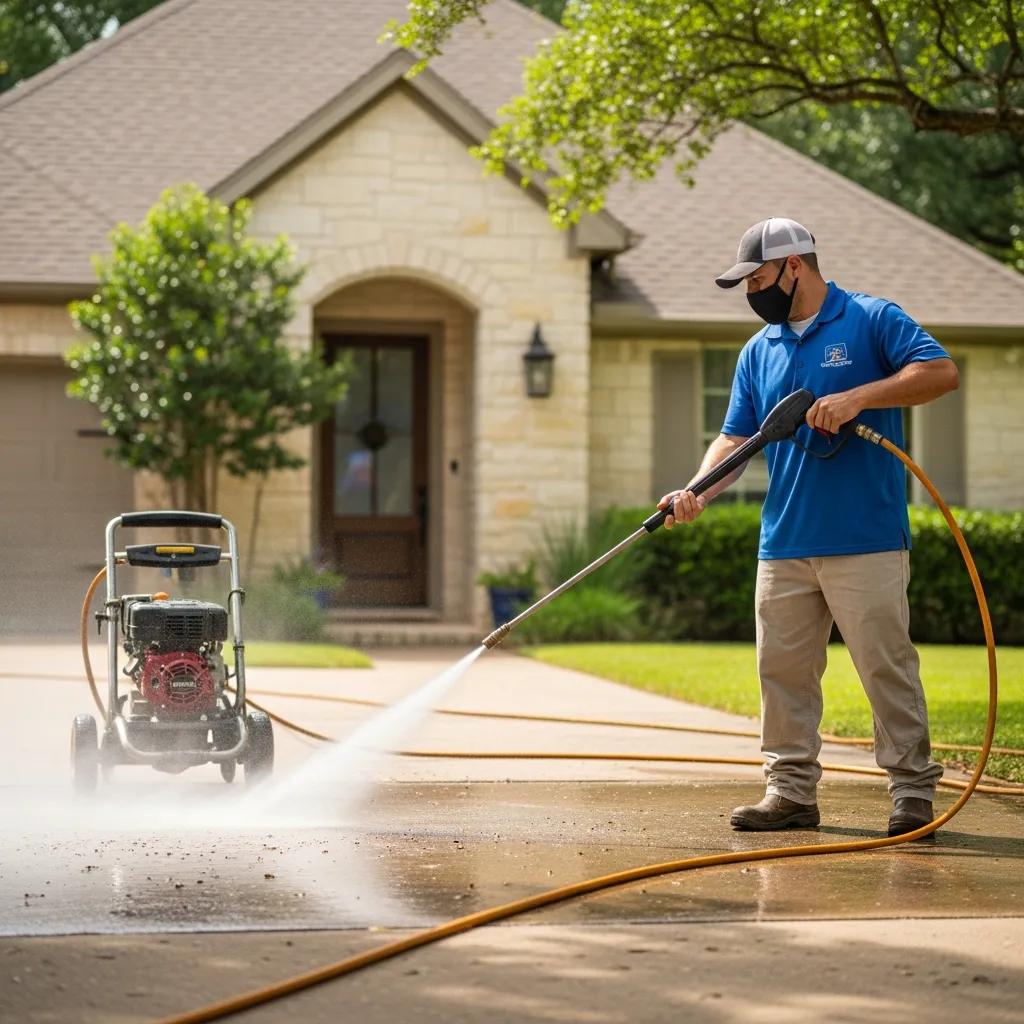
Cleaning concrete driveways removes oil, rust, and tire marks to restore surface uniformity and reduce slip hazards, which improves both aesthetics and safety. For siding, pressure washing removes pollen and organic buildup that can hold moisture against substrates and accelerate paint or finish failure; cleaning thus delays the need for repainting or siding repair. Careful pressure selection and technique prevent etching of concrete and damage to softer siding types. Regular cleaning maintains both visual appeal and material function while reducing cumulative deterioration over time.
These surface-specific benefits illustrate why scheduled pressure washing is a practical, protective strategy for Austin properties and why occasional professional intervention can be a cost-effective part of regular maintenance. For local assistance in implementing these programs, Georgetown Power Wash is one example of an Austin-area provider that offers tailored exterior cleaning services and can provide quotes to support maintenance planning.
For a quote or to review service options from a local expert, consider contacting Georgetown Power Wash to discuss scheduled cleaning and surface-specific recommendations.